
 English
 Español
 Pусский
 Français


AC-DC Power
AC-DC power conversion is the process of transforming alternating current (AC) from the grid into direct current (DC) required by electronic devices and many industrial systems. AC is characterized by a sinusoidal waveform that periodically reverses direction, typically at 50 or 60 hertz, depending on the region. DC, by contrast, flows in one constant direction and is used internally by almost all modern electronics, from smartphones and computers to LED lighting and control circuits.The conversion from AC to DC usually takes place in a device known as a power supply or power adapter. Inside, the first stage is often a transformer that adjusts the incoming AC voltage to a more suitable level, either stepping it down for low-voltage electronics or stepping it up for specific applications. After voltage adjustment, the AC signal passes through a rectifier, which converts the alternating waveform into a pulsating DC signal. This rectification is typically achieved with diodes arranged in configurations such as a bridge rectifier.Following rectification, the output is not yet smooth enough for sensitive electronic circuits. Therefore, a filtering stage is added, commonly using capacitors and sometimes inductors, to reduce ripple and provide a more stable DC level. In many modern designs, this is followed by regulation circuitry, which keeps the output voltage constant even when the input voltage or load conditions change. Linear regulators achieve this with relatively simple circuits but can waste energy as heat. Switch-mode power supplies, on the other hand, use high-frequency switching and smaller magnetic components to provide efficient and compact AC-DC conversion.Efficiency and safety are key considerations in AC-DC power systems. Efficient conversion minimizes energy losses and heat generation, which improves reliability and reduces the need for bulky cooling solutions. Safety is addressed through isolation barriers, fuses, surge protection, and adherence to international standards that limit electrical shock risk and electromagnetic interference. Many supplies incorporate power factor correction to reduce reactive power and meet regulatory requirements for grid-friendly operation.The quality of AC-DC conversion directly affects device performance, lifespan, and user experience. Poorly designed converters may introduce electrical noise, voltage fluctuations, or excessive heat, which can lead to malfunction or premature failure of connected equipment. Conversely, a well-engineered AC-DC power system delivers clean, stable power, supports a wide range of input voltages, and adapts to varying loads with minimal disturbance.As energy efficiency and sustainability become more important, AC-DC power technology continues to evolve. Designers focus on higher efficiency, reduced standby power consumption, compact size, and improved reliability. These advances enable increasingly powerful and sophisticated electronic systems to operate safely and efficiently from the global AC power infrastructure.
产品
分类:
-
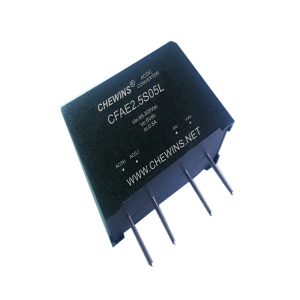
CFAE2.5-L系列 ACDC电源模块
所属分类: ——>2.5-50W浏览次数: 623编号:发布时间: 2025-11-19 09:08:59AC-DC电源模块是一种集成了交流转直流功能的完整电源解决方案
新闻
分类:
暂无搜索结果!
案例
分类:
暂无搜索结果!
视频
分类:
暂无搜索结果!
下载
分类:
暂无搜索结果!
招聘
分类:
暂无搜索结果!
推荐产品
暂无搜索结果!



 Whatsapp
 电话